Automobile Repair

Automobile Repair

Key Performance Indicator (KPI) for Automobile Repair

To name a few:

Operational Efficiency KPIs

  • Average Repair Order (ARO): Average revenue per customer repair. Tracks service value and ability to upsell.
  • Technician Efficiency: Billable hours per technician relative to available hours. Maximizing technician productivity is key.
  • Parts Availability: Percentage of parts in stock when needed. Avoids delays and customer frustration.
  • Cycle Time: Average time a vehicle spends in the shop from arrival to completion. Shorter times improve customer satisfaction.
  • Comebacks: Percentage of repairs that need to be re-done due to issues. High comeback rates indicate quality control problems.

Customer Satisfaction KPIs

  • Customer Satisfaction Scores (CSAT): Surveys to gauge satisfaction with the repair process and the outcome.
  • Net Promoter Score (NPS): Measures the likelihood of a customer recommending your shop. High NPS reflects strong loyalty.
  • Online Reviews: Monitor and address customer feedback on platforms like Google and Yelp.
  • Customer Retention Rate: The percentage of customers who return for additional repairs and maintenance. Building customer loyalty is crucial.

Financial KPIs

  • Gross Profit Margin: Percentage of revenue remaining after the direct cost of repairs (parts, labor).
  • Net Profit Margin: Percentage of revenue remaining after all expenses (overhead, labor, etc.) are accounted for. Measures overall financial health.
  • Labor Efficiency Rate: Actual revenue generated per hour of technician time vs. your standard billing rate. Higher rates suggest greater profitability.
  • Inventory Turnover: How often parts inventory is sold and replaced. High turnover reduces holding costs.
  • Days Receivable Outstanding (DSO): Average time to collect payments. Lower DSO improves cash flow.

Growth & Sales KPIs

  • New Customers Acquired: The number of new customers in a given period. Helps track growth.
  • Customer Acquisition Cost (CAC): Cost to acquire a new customer through marketing and sales efforts. Monitor this to manage growth expenses.
  • Referral Rate: Percentage of customers coming through referrals. Strong referrals indicate positive customer experience.

Additional Considerations

  • Technician Specialization: If you have technicians specializing in specific car brands or systems, track performance metrics relevant to their areas.
  • Warranty Repairs: Track the volume and cost associated with warranty repair work to understand its impact on profitability.

Attorney / Law Firms

Law Firms

Key Performance Indicator (KPI) for Attorney / Law Firms

To name a few:

Financial KPIs

  • Realization Rate: Percentage of billable hours actually billed to clients. A higher realization rate means better time capture.
  • Collection Rate: Percentage of billed hours that are collected from clients. Strong cash collection is crucial for firm health.
  • Profit Margin: Percentage of revenue remaining after expenses are accounted for. Measures overall profitability.
  • Overhead Costs: Operating expenses (rent, staff, etc.) as a percentage of revenue. Manage this ratio closely for better profit.
  • Revenue per Lawyer: Revenue generated per attorney. Helps track efficiency and measure performance.

Productivity KPIs

  • Billable Hours: Total hours attorneys spend on revenue-generating work. Key revenue driver for most firms.
  • Utilization Rate: Percentage of working hours billed vs. total hours available. Higher utilization often translates to better revenue.
  • Leverage Ratio: Number of associates compared to partners. Indicates the workforce structure of the firm.

Case Management KPIs

  • Average Case Cycle Time: Time from client intake to case closure. Shorter timelines can mean increased efficiency and client satisfaction.
  • Case Win Rate: Percentage of cases resulting in favorable outcomes. Track this by practice area.
  • Settlement Amounts: Average settlement value obtained for clients (relevant for litigation-focused firms).
  • Case Profitability: Profit margin per case or practice area. Helps identify the most profitable types of work.

Client-Focused KPIs

  • Client Satisfaction (CSAT): Surveys to gauge satisfaction with legal services, communication, etc.
  • Net Promoter Score (NPS): Measures the likelihood of clients recommending your firm. High NPS shows loyalty.
  • Client Retention Rate: Percentage of clients who return for additional legal services. Long-term clients are valuable.
  • Client Referral Rate: Percentage of new clients who came via referrals. Indicates a strong reputation.

Growth & Sales KPIs

  • New Clients Acquired: Number of new clients in a given period. Tracks growth of client base.
  • Conversion Rate: Percentage of initial consultations translated into engaged clients.
  • Marketing ROI: Return on investment in various marketing and client development efforts.

Additional Considerations

  • Matter-Specific KPIs: Track costs, deadlines, and progress on high-value matters.
  • Pro Bono Hours: For firms prioritizing pro bono work, track hours spent serving those in need.
  • Diversity & Inclusion: Track representation within your lawyer ranks and leadership positions.

Accountant

Certified Public Accountant

Key Performance Indicator (KPI) for Accountant

To name a few:

Client-Focused KPIs

  • Client Retention Rate: Percentage of clients that continue using your services year to year. A high retention rate indicates client satisfaction and a stable practice.
  • Client Satisfaction (CSAT): Surveys to gauge client satisfaction with services, communication, and overall experience with your firm.
  • Net Promoter Score (NPS): Measures client loyalty and their likelihood of recommending your services to others.
  • Client Referral Rate: Percentage of new clients coming through referrals from existing clients. Strong referrals reflect client satisfaction.
  • Average Client Lifetime Value (CLV): The projected total revenue generated from a client over the duration of their relationship.

Financial KPIs

  • Profitability: Track both gross and net profit margins to measure overall firm health.
  • Realization Rate (Utilization): Percentage of billable hours vs. total work hours. Higher realization means better use of your team’s time.
  • Revenue per Employee: Measures revenue generated per employee. Helps track workforce efficiency and productivity.
  • Overhead Ratio: Overhead costs (rent, admin, etc.) as a percentage of revenue. Manage this ratio closely for optimal profitability.
  • Days Sales Outstanding (DSO): Average time it takes to collect payment. Lower DSO indicates a healthier cash flow.

Service Delivery KPIs

  • Turnaround Time: Average time to complete tasks like tax returns, financial statements, or audits. Timely completion is crucial for client satisfaction.
  • Error Rate: Percentage of work requiring rework or correction due to errors. High accuracy is paramount for the accounting profession.
  • On-Time Filing Rate: Percentage of tax returns and compliance documents filed on or before deadlines to avoid penalties.

Growth & Sales KPIs

  • New Clients Acquired: The number of new clients added in a given period. Tracks growth of your client base.
  • Sales Conversion Rate: Percentage of leads or consultations that convert into paying clients. Tracks the effectiveness of your sales process.
  • Marketing ROI: Return on investment for various marketing initiatives. Helps focus on the most effective strategies.

Operational KPIs

  • Work in Progress (WIP): Value of work started but not yet billed. Helps with projecting revenue and resource planning.
  • Project Profitability: Profit margin on individual client projects. Identifies the most profitable service areas.
  • Technology Adoption: Track utilization and success of accounting software, practice management tools, etc., to maximize efficiency.

Employee-Focused KPIs

  • Employee Satisfaction: Track morale and engagement with surveys. Engaged employees contribute to better client service.
  • Training & Development Hours: Investment in ongoing professional development enhances your team’s skills and knowledge base.
  • Employee Turnaround Rate: Percentage of staff leaving in a given period. High turnover can be disruptive and expensive.

Microsoft – Power BI

Microsoft Power BI - Ultimate BI

What is Power BI?

  • Business Intelligence (BI) Platform: Power BI is a suite of tools that help you turn raw data into meaningful, easy-to-understand insights through visualizations and reports.
  • Part of the Microsoft Ecosystem: It integrates seamlessly with other Microsoft products like Excel, Office 365, and Azure.

Why Choose Power BI?

  • Powerful Data Visualization: Create stunning charts, graphs, maps, and other visuals to present data compellingly. Easily spot trends, outliers, and gain insights that tables of numbers wouldn’t reveal.
  • Handles Diverse Data: Connect to a multitude of data sources—spreadsheets, databases, cloud services, and more. Power BI can bring it all together into a single, organized view.
  • Intuitive Interface: A relatively easy-to-learn interface means less technical training is usually needed to get your team up to speed. The drag-and-drop environment makes it approachable for analysts and regular business users alike.
  • Collaboration and Sharing: Easily share dashboards and reports with colleagues. Control access and permissions to ensure data security.
  • Real-time Updates: Create dashboards that dynamically display data as it changes, empowering faster decision-making.
  • Cost-Effective: Offers a free tier for individual use and affordable subscription plans for organizations, making it a scalable solution.
  • Self-Service BI: Power BI puts analytic power in the hands of business users. This reduces reliance on IT staff for creating reports, freeing up resources.
  • Advanced Features: Natural language Q&A (ask questions, get visualized answers), AI-powered insights, data modeling, and more give experienced users a deep analytical toolkit.

Typical Use Cases

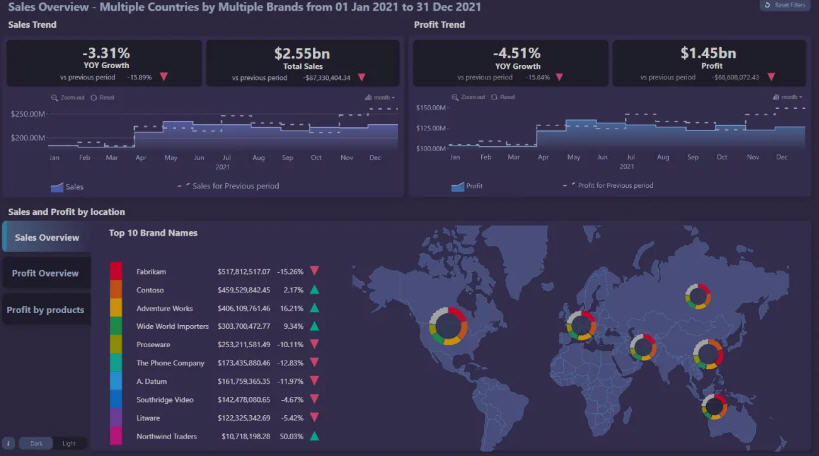
  • Sales Performance Monitoring: Track key sales metrics, region-wise performance, and product trends.
  • Financial Analysis: Analyze profit margins, track budgets, and create financial forecasts.
  • Marketing Campaign Tracking: Measure campaign effectiveness, ROI, and customer behavior.
  • Operations Monitoring: Visualize production efficiency, inventory levels, and supply chain issues.
  • Customer Insights: Understand customer demographics, buying patterns, and satisfaction levels.
Gartner BI

Licensing Cost

Microsoft offers several license options for Power BI. Here’s a breakdown of the primary choices:

1. Power BI Free:

  • Ideal for: Individual exploration and basic report creation.
  • Limitations: Limited sharing capabilities, no collaboration features, smaller data capacity.
  • Cost: Free

2. Power BI Pro:

  • Ideal for: Individuals and teams needing collaboration, sharing, and more robust BI capabilities.
  • Features:
    • Everything in Power BI Free
    • Creation of data models, advanced data shaping
    • Sharing of dashboards and reports
    • Workspaces for collaboration
    • Scheduled data refreshes
    • Ability to subscribe to dashboards and reports
  • Cost: $9.99 per user per month (USD).

3. Power BI Premium:

  • Ideal for: Large enterprises requiring dedicated resources, advanced features, and significant data volumes.
  • Features:
    • Everything in Power BI Pro
    • Dedicated capacity for consistent performance
    • Larger data model sizes
    • AI-driven features
    • Deployment pipelines
    • Advanced administrative controls
  • Cost:
    • Premium Per Capacity: Starts at $4,995 per month (USD) for a dedicated capacity node.
    • Premium Per User: $20 per user per month (USD).

Important Notes:

  • Microsoft 365 E5 subscriptions include Power BI Pro.
  • Additional Power Bi Premium features like paginated reports and more frequent refreshes may incur additional costs.
  • You can use the Power BI Premium calculator to get cost estimates tailored to your needs: https://powerbi.microsoft.com/en-us/calculator/

Choosing the Right Option:

The best license option depends on your needs:

  • Individual Use/Testing: Start with Power BI Free.
  • Teams & Collaboration: Opt for Power BI Pro.
  • Enterprise-Scale Needs: Consider Power BI Premium for its dedicated capacity and advanced features.

Consulting Cost

Consulting cost could cover Development and Maintenance. 

Every requirement could be different depending on :

Organization (Ex: Hotel, Insurance, Finance)

Data (Data- Cleaning required) 

KPI (Key Performance Indicator or Business Question to address)

Number of Data Sources (Data Modelling) 

We can work on Hourly Rate, Fixed Cost depending on the expectation after being fully documented. 

Data Analysis

Select your industry and KPI from the drop-down menu. 

data analysis

Why Data Analysis Matters?

Data is crucial for a multitude of reasons:

Informed Decision Making: Data provides the foundation for making informed decisions. Whether in business, science, or public policy, having access to accurate and relevant data helps stakeholders understand trends, identify opportunities, and mitigate risks.

Performance Evaluation: Data allows for the evaluation of performance and progress towards goals. By tracking metrics and key performance indicators (KPIs), organizations can assess their effectiveness, identify areas for improvement, and optimize their strategies.

Insight Generation: Data analysis can uncover valuable insights that may not be immediately apparent. Through techniques such as data mining, machine learning, and statistical analysis, organizations can discover patterns, correlations, and trends that can inform strategic planning and innovation.

Risk Management: Data helps in identifying and mitigating risks. By analyzing historical data and forecasting future scenarios, organizations can anticipate potential risks and take proactive measures to minimize their impact.

Resource Optimization: Data-driven insights enable more efficient allocation of resources. Whether it’s optimizing supply chain logistics, scheduling workforce activities, or managing financial investments, data helps organizations maximize their efficiency and effectiveness.

Innovation and Growth: Data serves as a catalyst for innovation and growth. By leveraging data analytics, organizations can identify new market opportunities, develop innovative products and services, and stay ahead of competitors in rapidly evolving industries.

Transparency and Accountability: Data fosters transparency and accountability by providing a clear record of actions and outcomes. By making data accessible to stakeholders and the public, organizations can demonstrate accountability, build trust, and foster collaboration.

Overall, data is essential for driving progress, fostering innovation, and enabling organizations to adapt and thrive in an increasingly complex and interconnected world.

Why use World Group Solutions (WGS)?